
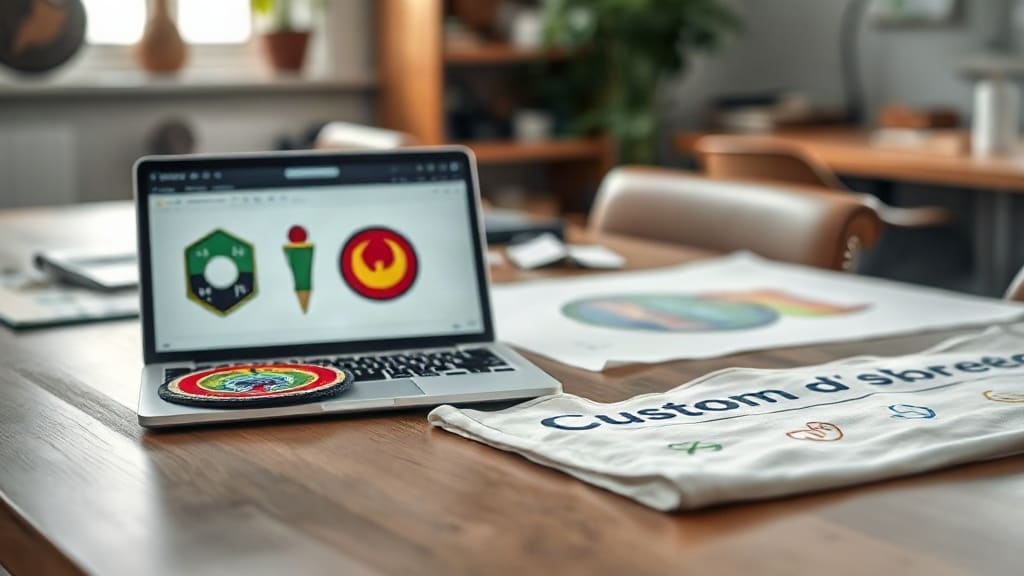
Imagine holding a perfectly embroidered patch that captures your team's logo in vivid detail, or unfurling a banner that commands attention at your next event. With print on demand, turning these ideas into reality has never been easier. Whether you're a small business owner, event organizer, or someone passionate about personalizing gear, understanding how print on demand works for custom patches and custom banner printing can save you time, money, and frustration. In this guide, we'll walk you through the entire process, from design to delivery, and share insider tips to ensure your projects stand out.
What Is Print on Demand and Why It Matters
Print on demand (POD) is a production model where items are printed only after an order is placed. Unlike traditional bulk manufacturing, POD eliminates the need for large upfront investments and inventory storage. For custom patches and custom banner printing, this means you can order exactly what you need, when you need it. This flexibility is ideal for small businesses testing new designs or individuals creating one-of-a-kind items.
The rise of digital printing technology has made POD more accessible than ever. Today, you can achieve professional-quality results without minimum order quantities. Whether you need a single patch for a jacket or a dozen banners for a trade show, POD services cater to your scale. This democratization of production empowers creators and entrepreneurs to bring their visions to life without financial risk.
How Print on Demand Works for Custom Patches
Custom patches are small pieces of fabric, often embroidered or printed, that can be sewn or ironed onto clothing and accessories. With POD, the process begins with your design. You can upload artwork in various formats, and the manufacturer will produce the patches using techniques like embroidery, woven weaving, or digital printing. Each method offers distinct advantages in terms of durability, detail, and cost.
Embroidery is the classic choice for custom patches, providing a textured, premium look that withstands wear and tear. Woven patches, on the other hand, allow for finer details and are lighter weight. Digital printing is ideal for complex, multi-colored designs with gradients or photographic elements. When you order through a POD service, you can often choose the backing (e.g., iron-on, Velcro, or adhesive) and the border style (merrowed or laser-cut).
The turnaround time for POD patches varies. Some services offer express production, while others may take a few weeks. It's essential to communicate your deadline clearly and confirm the production schedule before placing an order. Additionally, always request a digital proof or a physical sample if you're ordering in bulk. This step ensures that colors, sizes, and details meet your expectations.
Choosing the Right Material for Your Patches
The material you choose affects the look, feel, and longevity of your custom patches. Here are common options:
- Cotton: Soft, natural, and ideal for embroidery. It takes threads well and feels comfortable on garments.
- Polyester: Durable and colorfast, perfect for vibrant designs. It resists shrinking and fading.
- Felt: A budget-friendly option often used for woven patches. It has a matte finish and is lightweight.
- Leather: Premium and stylish, leather patches add a touch of sophistication to jackets and bags.
Consider the end use: patches for outdoor gear should be weather-resistant, while those for fashion may prioritize aesthetics. When in doubt, ask your POD provider for material samples to compare quality.
Design Tips for Standout Patches
Creating a design that translates well into a patch requires some forethought. Keep these tips in mind:
- Simplify: Too much detail can get lost in embroidery. Use bold shapes and clear lines.
- Limit colors: Each color adds complexity and cost. Stick to a cohesive palette.
- Think about size: Small patches need larger elements to be legible. Standard sizes range from 2 to 5 inches.
- Test contrast: Ensure your design stands out against the background fabric.
If you're unsure, consult with a designer or use online tools that simulate how your artwork will look as a patch. Many POD platforms offer free design assistance or templates.
Custom Banner Printing with Print on Demand
Custom banner printing is another popular POD application. Banners are used for advertising, events, trade shows, and personal celebrations. With POD, you can order a single banner or hundreds, each printed with your unique message. The process involves selecting a material, size, and finishing options, then uploading your design.
Common banner materials include vinyl, mesh, and fabric. Vinyl is durable and weather-resistant, making it suitable for outdoor use. Mesh allows wind to pass through, reducing strain on the banner and frame. Fabric banners offer a premium look and are often used indoors for a polished appearance. Your choice depends on where and how long you plan to display the banner.
Key Considerations for Banner Design
A well-designed custom banner grabs attention and communicates your message effectively. Here's what to keep in mind:
- Readability: Use high-contrast colors and large fonts. Avoid clutter.
- Resolution: Images should be at least 150 DPI at full size to prevent pixelation.
- Bleed area: Extend background colors beyond the trim line to avoid white edges.
- Call to action: Include a clear next step, like a website or phone number.
Also, consider the viewing distance. A banner seen from 50 feet needs much larger text than one viewed up close. If you're unsure, ask your printer for a proof or a small-scale sample.
Choosing the Right Size and Finishing for Banners
Banners come in standard sizes, but you can order custom dimensions to fit your space. Common sizes include 2x4 feet, 3x6 feet, and 4x8 feet. Finishing options include grommets, pole pockets, and hemming. Grommets are metal rings that allow you to tie the banner down; pole pockets are sleeves for inserting a rod. These details affect how you'll hang the banner, so plan accordingly.
For outdoor banners, consider wind slits to reduce wind load. For indoor use, a clean hem without grommets might look more elegant. Always discuss your specific needs with your POD provider to get the best recommendation.
Benefits of Using Print on Demand for Patches and Banners
Opting for POD over traditional manufacturing offers several advantages:
- No minimum order: Order one or one thousand, giving you flexibility.
- Cost-effective: No need to pay for bulk inventory upfront.
- Fast turnaround: Many POD services produce and ship within days.
- Eco-friendly: Producing only what's needed reduces waste.
- Easy customization: Change designs or sizes between orders effortlessly.
These benefits make POD ideal for small businesses, event planners, and individuals who want high-quality custom patches and custom banner without the hassle of traditional manufacturing.
How to Choose a Reliable Print on Demand Partner
Not all POD services are created equal. To ensure you get the best results, evaluate potential partners based on:
- Quality: Request samples to assess print clarity, material durability, and stitching.
- Turnaround time: Confirm production and shipping times, especially for urgent orders.
- Customer service: Look for responsive support and clear communication.
- Pricing: Compare quotes, but don't sacrifice quality for cost.
- Reviews: Check testimonials and ratings from other customers.
A reputable partner will guide you through the process and address any concerns. Don't hesitate to ask questions about their production methods, materials, and guarantees.
Frequently Asked Questions
Can I order just one custom patch or banner?
Yes, many print on demand services specialize in low-volume orders, including single items. This is perfect for personal projects or testing a design before a larger run.
What file format should I use for my design?
Most printers prefer vector files (e.g., AI, EPS, PDF) for sharp lines and scalability. For images, high-resolution PNG or TIFF files (300 DPI) work well. Always ask your provider for their preferred format.
How long does production take for custom patches and banners?
Production times vary by provider and complexity. Simple patches might take 3-5 business days, while intricate embroidery or large banners could take 7-10 days. Shipping time is additional.
Are print on demand patches and banners durable?
Absolutely. When made with quality materials and proper techniques, custom patches and custom banner can last for years. Outdoor banners may need UV-resistant inks and weatherproof materials.
Can I get a sample before placing a large order?
Most reputable POD services offer samples or digital proofs. It's a smart step to ensure satisfaction, especially for bulk orders.
Final Thoughts
Print on demand has transformed how we create and consume personalized products. For custom patches and custom banner, it offers unparalleled flexibility, quality, and convenience. By understanding the processes, materials, and best practices outlined in this guide, you're well-equipped to bring your designs to life. Whether you're outfitting a team, promoting a business, or celebrating a milestone, POD makes it easy to get exactly what you need, exactly when you need it.