
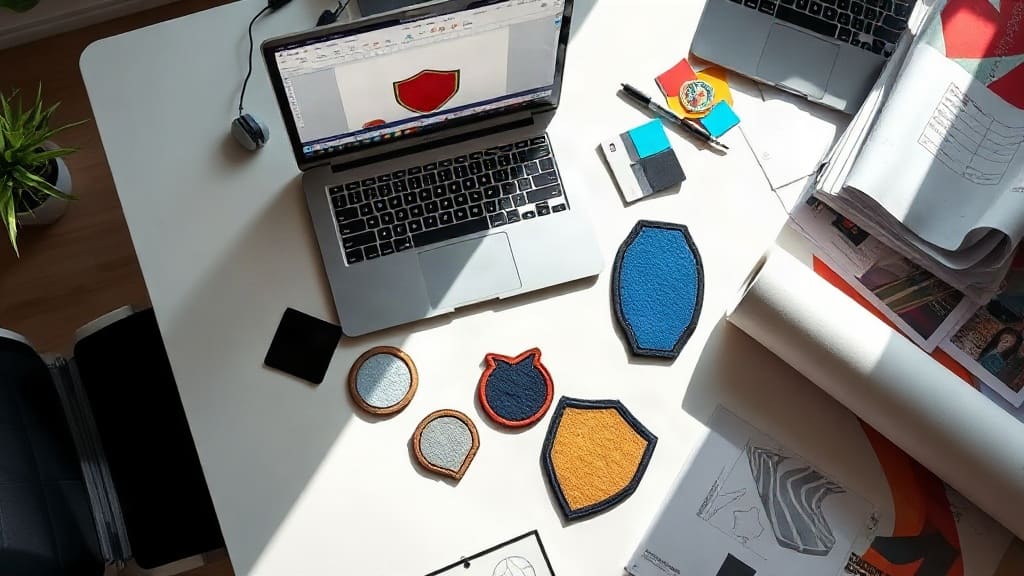
Print on demand has transformed the way businesses and individuals approach custom merchandise. Instead of ordering large quantities and hoping they sell, you can now produce items as orders come in. This model is particularly useful for products like custom patches and custom banners, which are often needed in specific sizes, colors, and quantities. Whether you're launching a clothing brand, organizing an event, or creating promotional materials, understanding how print on demand works for these items can save you time and money.
In this guide, we'll break down what print on demand is, how it applies to custom patches and custom banner production, the key benefits and drawbacks, and practical steps to get started. We'll also provide design tips and answer common questions to help you make informed decisions.
What Is Print on Demand?
Print on demand (POD) is a business model where products are manufactured only after a customer places an order. Unlike traditional manufacturing, which requires minimum order quantities and inventory storage, POD allows you to create items one at a time or in small batches. This approach is popular for apparel, accessories, and home decor, but it's also applicable to custom patches and custom banner.
With POD, you upload your designs to a platform or work with a supplier who handles production and shipping. When a sale occurs, the supplier prints or embroiders your design on the product and sends it directly to the customer. This eliminates the need for upfront investment and reduces the risk of unsold stock.
Why Choose Print on Demand for Custom Patches?
Custom patches are versatile. They can be used for clothing embellishment, team uniforms, corporate branding, or even as collectibles. Printing on demand for patches offers several advantages:
- No Inventory Risk: You don't need to buy hundreds of patches upfront. You only produce what you sell, which is ideal for testing new designs or catering to niche audiences.
- Flexible Quantities: Whether you need one patch or a hundred, POD vendors can accommodate varying order sizes without price penalties for small runs.
- Design Freedom: You can offer multiple designs, colors, and shapes without worrying about dead stock.
- Scalability: As your sales grow, your POD provider can handle larger volumes, but you're not forced to commit to large orders.
However, there are considerations. Production costs per unit are typically higher than bulk manufacturing, and lead times may be longer. Also, the quality of embroidered or woven patches can vary between providers, so it's essential to choose a reputable company.
The Benefits of Print on Demand for Custom Banners
Custom banners are essential for events, retail displays, trade shows, and personal celebrations. Using a POD approach for banners means you can order exactly what you need, when you need it. Here's why this is beneficial:
- No Minimums: Traditional banner printing often requires a minimum quantity, but many POD services allow you to order a single banner.
- Easy Reordering: If you need a banner for an upcoming event, you can order it fresh each time, ensuring it arrives in perfect condition without storing bulky materials.
- Customization: You can personalize each banner for different events or locations, updating text and images as needed.
- Variety of Materials: POD providers offer several banner materials, from vinyl to fabric, so you can choose the best option for indoor or outdoor use.
One downside is that rush orders may not always be possible, and you'll need to plan ahead for shipping times. Additionally, color accuracy can vary from screen to print, so it's wise to request a proof before production.
How Print on Demand Works for Custom Patches
The process for creating custom patches with POD involves several steps. First, you prepare your artwork, ensuring it meets the provider's specifications. Then, you choose the type of patch: embroidered, woven, printed, or PVC. Each has a different look and feel.
Embroidered patches have a classic, textured appearance and are durable. Woven patches allow for finer details and smoother edges. Printed patches can reproduce complex graphics and gradients, but they may fade over time. PVC patches are rubber-like and weather-resistant.
Once you've selected the style, you specify the size, shape, and backing option, such as iron-on, adhesive, or Velcro. After uploading your design, the provider will often send a digital mockup for approval. Upon approval, production begins, and the patches are shipped to you or your customer.
For a better understanding, here's a step-by-step breakdown:
- Design Creation: Use vector software like Adobe Illustrator or free tools like Inkscape to create scalable designs. Keep text and complex elements within safe areas.
- Choose Provider: Research POD companies that specialize in patches. Read reviews and compare pricing.
- Set Up Product Listing: If selling online, integrate your e-commerce platform with the POD provider through apps or APIs.
- Order Fulfillment: When a customer orders, the provider produces the patch and ships it, often with branding options like custom packaging.
How to Create a Custom Banner with Print on Demand
Ordering a custom banner via POD is straightforward. You start by selecting the banner size, such as 3x6 feet or 4x8 feet, and the material, like vinyl or mesh. Next, you upload your artwork, which should be high-resolution (300 DPI at the final printed size is ideal).
You can choose from various finishing options, including hemming, grommets, pole pockets, or stand-up banner bases. After submitting your order, the provider will provide a digital proof. Once you approve it, the banner is printed and shipped.
For best results, keep these tips in mind:
- Use high-contrast colors and large fonts for readability from a distance.
- Consider the viewing distance to determine the appropriate font size.
- If the banner will be used outdoors, select weather-resistant materials and UV-resistant inks.
- Always proofread your text and check for alignment before finalizing.
Design Tips for Print on Demand Products
Creating effective designs for custom patches and custom banner is crucial. Here are some practical suggestions:
For Custom Patches
Keep the design simple. Embroidery and weaving have limitations in reproducing fine details. Thick lines and bold shapes work best. Limit the number of colors to reduce costs and maintain clarity. Also, consider the patch's final use; if it's for a jacket, it may need to withstand friction, so choose durable stitching.
For Custom Banners
Make sure your message is concise. Use a clear hierarchy: the main message should be prominent, followed by secondary information. Use high-quality images if you include them, and avoid using copyrighted materials without permission. For outdoor banners, ensure there is enough contrast between the background and text.
Another tip is to use templates provided by POD services. They often have pre-set dimensions and safe zones, which can prevent design errors.
Choosing the Right Print on Demand Provider
Selecting a reliable provider is critical for the success of your POD venture. Consider factors like product quality, pricing, turnaround time, shipping costs, and customer service. Look for providers that specialize in patches or banners, as they are more likely to have advanced production capabilities.
Read customer reviews and check samples if possible. Some companies offer sample kits for purchase, which can help you evaluate the quality before committing to a large order. Also, ensure the provider integrates smoothly with your sales platform if you're selling online.
Popular POD services for patches include custom patch specialists, while for banners, general printing companies may offer POD. However, niche providers often have more experience and better options.
Costs and Profitability in Print on Demand
One of the main advantages of POD is that you don't need to invest in inventory. However, the per-unit cost is higher than bulk manufacturing. For patches, the cost depends on size, complexity, and quantity. For banners, the cost is primarily based on size and material.
To maintain profitability, you need to price your products appropriately. Factor in the production cost, shipping, and your desired profit margin. Use competitive analysis to see what others are charging. Remember that customers often pay a premium for unique, customized items.
Additionally, consider offering bundles or discounts for multiple orders to encourage higher sales volumes. By marketing effectively, you can build a sustainable business with POD.
Common Pitfalls to Avoid
While POD is convenient, there are potential pitfalls. One common mistake is ignoring design specifications, leading to blurry or misaligned prints. Always follow the provider's guidelines for file formats, resolution, and color modes.
Another issue is underestimating shipping times. If you're selling for a specific date, like an event, order well in advance. Also, be aware of international shipping regulations and customs if you're shipping globally.
Finally, don't overlook the importance of customer service. If a customer receives a defective product, you need a clear return policy. Work with providers that offer some form of guarantee.
Integrating Print on Demand with Your Business
POD is not just for individual sellers; it's also valuable for established businesses. For example, a clothing brand can offer limited edition patches without committing to large quantities. An event planning company can order custom banners for each new client with minimal hassle.
To integrate POD into your business, automate the process as much as possible. Use e-commerce platforms like Shopify or Etsy, which have built-in POD integrations. Set up your product listings with clear descriptions and images. When orders come in, they are automatically forwarded to your provider for fulfillment.
You can also use POD for promotional products. If you're organizing a corporate event, you can create custom banners and patches for giveaways, ensuring you have exactly the right amount without surplus.
Case Studies: Successful Use of POD for Patches and Banners
Many entrepreneurs have found success with POD. For instance, a small startup launched a line of embroidered patches for outdoor enthusiasts. They started with a POD service, testing multiple designs. Once certain patches gained popularity, they moved to bulk production for better margins.
In another example, a nonprofit organization needed banners for various fundraising events. Using POD, they ordered banners with specific event names and dates, saving storage space and reducing waste. They also created custom patches for volunteers, enhancing team spirit.
These examples show that POD offers flexibility and efficiency, making it a smart choice for many scenarios.
Frequently Asked Questions
What are the minimum order quantities for POD patches and banners?
With print on demand, there is typically no minimum order requirement for many products. You can order a single custom patch or banner. However, some providers may have a low minimum, such as 10 pieces for patches, depending on the production method. Always check with the specific provider for their policies.
How long does shipping take for custom banners?
Shipping times vary based on the provider's location and your destination. Generally, production takes a few days, and shipping can take anywhere from 3 to 10 business days domestically. International orders may take longer. It's advisable to place orders well in advance of your event.
Can I print on demand with my own brand packaging?
Many POD providers offer branding options, such as custom packaging inserts or labels. Some may allow you to include your logo on the outer packaging for an additional fee. Check with your provider to see what customization is available.
What file format should I use for my designs?
For patches, vector files like AI, EPS, or SVG are preferred because they scale without losing quality. For banners, high-resolution raster files like PNG or JPG with 300 DPI are acceptable. Always review the provider's specifications to ensure compatibility.
Are there any copyright issues with using images in my custom banners?
Yes, you must have the rights to any images or text you use. Avoid using copyrighted logos, characters, or artwork without permission. If you're hiring a designer, ensure they provide original work. Using unlicensed material can lead to legal problems and your order may be rejected.
Conclusion
Print on demand has opened up exciting possibilities for creating custom patches and custom banner without the burden of inventory. Whether you're a small business owner, an event organizer, or a creative individual, POD allows you to bring your ideas to life with minimal risk and maximum flexibility.
By understanding the process, choosing the right provider, and applying good design principles, you can produce high-quality products that meet your needs. Start small, test different designs, and refine your approach based on feedback. With POD, the opportunities are endless.