
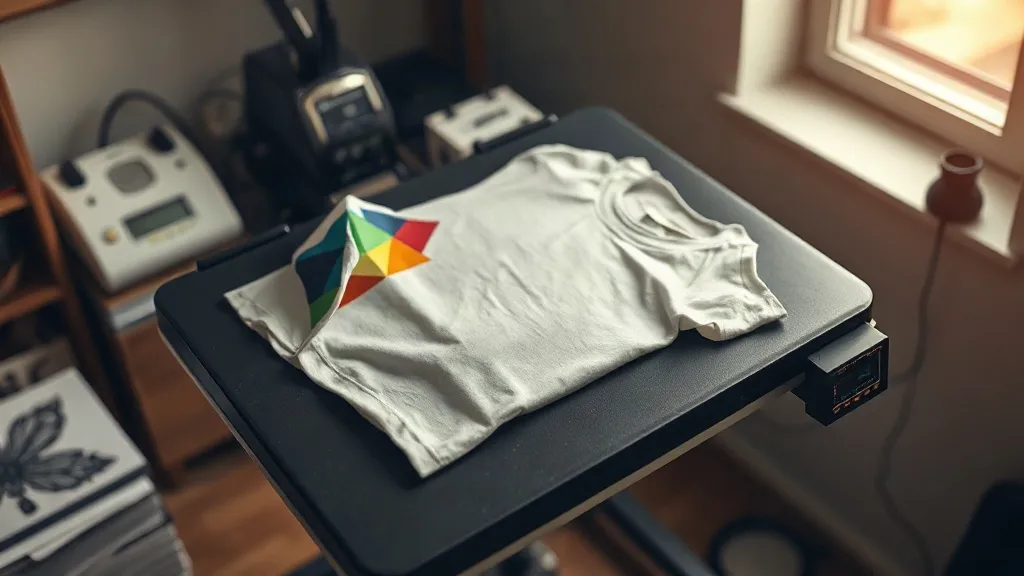
You press a shirt, peel the carrier, and the corner of the design lifts with it. Or the print looks washed out before it has even seen a washing machine. The instinct is to blame the film, email the supplier, and order a replacement. But after pressing thousands of dtf transfers across different fabrics and press setups, one pattern holds true: the vast majority of failures trace back to the application, not the transfer itself. This guide walks through the specific mistakes that cause peeling, cracking, and color loss, and shows how to correct each one with adjustments you can make on your next press.
Why DTF Failures Usually Start at the Press
dtf film arrives with a thermoplastic adhesive powder fused to the ink. That powder only bonds properly when it hits the right combination of heat, pressure, and time. Get one variable wrong and the adhesive never fully activates, so the print sits on top of the fabric instead of locking into it. The transfer can look fine coming off the press and still fail after the first wash, which is why so many shops misdiagnose the problem as bad film.
Before changing suppliers, run a controlled test. Press the same design onto the same blank three times with one variable adjusted each time: pressure, then temperature, then dwell time. Keep notes. In most cases you will find the failure point within a single afternoon, and you will have a repeatable setting for that fabric going forward.
The Three Variables That Decide Whether a Print Survives
Pressure: The Most Overlooked Setting
Medium to firm pressure is the baseline for dtf transfers. Too little pressure and the adhesive powder never contacts the fabric fibers deeply enough to bond. Too much pressure and the powder can spread beyond the design edge, leaving a faint halo around the print. If your press has a pressure gauge, aim for a consistent reading and check it weekly, since pneumatic presses drift over time. On a manual press, press a scrap garment and look at the impression left in the fabric; you want a clear, even texture change across the whole platen, not a faint shadow in the center.
Temperature: Respect the Fabric, Not Just the Film
Most DTF films specify a press temperature in the 300 to 320°F range, but the fabric sets the ceiling. Polyester blends scorch and shrink above certain thresholds, and heat-sensitive synthetics can glaze under high heat. Cotton handles the upper end comfortably. The mistake is treating one temperature as universal. Build a small reference card for your five most-used blanks with the temperature that works for each, and you will stop guessing on every order.
Dwell Time and Peel Timing
Dwell time is usually 10 to 15 seconds for the main press, but peel timing matters just as much. Cold peel films need the garment to cool completely before the carrier comes off; peel too early and the adhesive stretches and weakens. Warm peel films want the carrier removed while the garment is still warm to the touch. Mixing up the two is one of the most common causes of a print that lifts at the edges. Label your film rolls with the peel type so nobody on the team has to guess at 11pm before a deadline.
Diagnosing Specific Defects
Peeling at the Edges
Edge lift almost always points to uneven pressure or a cool corner of the platen. Check that the transfer is centered and that the press closes flat. On larger designs, press in two passes if your platen is smaller than the artwork. A second short press of 5 seconds over the problem area often solves it without reprinting.
Cracking After Washing
Cracking means the adhesive bonded to the surface of the fabric but not into the weave. Increase pressure slightly and extend dwell time by 2 to 3 seconds. Also check the stretch of the garment: on high-stretch knits, a rigid print will crack no matter how well it is applied, so consider a smaller design or a fabric with more structure.
Dull or Faded Color
If the color looks muted straight off the press, the film may have been stored in humid conditions or the press temperature was too low to fully melt the powder. Store film sealed and flat, away from damp basements, and bring it to room temperature before pressing. Cold film straight from a delivery van can behave unpredictably for the first few sheets.
Fabric Matters More Than Most Shops Admit
A transfer that performs beautifully on a 100% cotton heavyweight tee can fail on a smooth polyester performance shirt. Cotton has a textured surface that grips the adhesive; slick synthetics give it less to hold onto. For polyester, lower the temperature, increase dwell time slightly, and always test on a scrap before committing to a bulk run. Heavily dyed garments can also bleed under heat, so a quick press test on an inside seam saves a lot of ruined orders.
A Short Pre-Press Checklist
- Confirm the blank's fiber content and heat tolerance.
- Set pressure to medium-firm and verify with a test press.
- Pre-press the garment for 3 to 5 seconds to remove moisture.
- Place the transfer, cover with a protective sheet, and press at the film's specified settings.
- Follow the correct peel timing for that film type.
- Do a second short press with a cover sheet to lock the edges.
- Wash one sample before shipping the batch.
None of these steps takes long, but skipping any one of them is how a perfectly good dtf transfer ends up in the reprint pile. The shops that rarely see failures are not using magic film; they are simply consistent.
Frequently Asked Questions
Why does my DTF transfer peel off after the first wash?
Peeling after washing usually means the adhesive did not fully activate. Check pressure first, then confirm you used the correct peel timing and that the garment was fully cooled or warm as the film requires. A second short press after peeling often resolves minor edge lift.
Can I press DTF transfers onto polyester without damaging the fabric?
Yes, but you need to stay within the fabric's heat tolerance. Lower the press temperature, extend dwell time slightly, and always test on a scrap piece first. Slick polyester also benefits from a little more pressure to help the adhesive grip.
What temperature should I use for DTF transfers?
Most films call for 300 to 320°F, but the fabric sets the real limit. Cotton tolerates the upper range, while polyester blends need the lower end. Build a reference card for your most-used blanks so every operator presses consistently.
How do I stop DTF prints from cracking?
Cracking signals the print bonded to the surface rather than into the weave. Increase pressure and dwell time slightly, and avoid overly rigid designs on high-stretch knits. Washing inside out in cold water also extends print life.
Does DTF work on dark and light fabrics equally well?
DTF handles both because the white ink layer provides opacity, but dark fabrics can require slightly more careful pressing since dye bleed is more visible. Always run a test press on dark blanks before a bulk order.